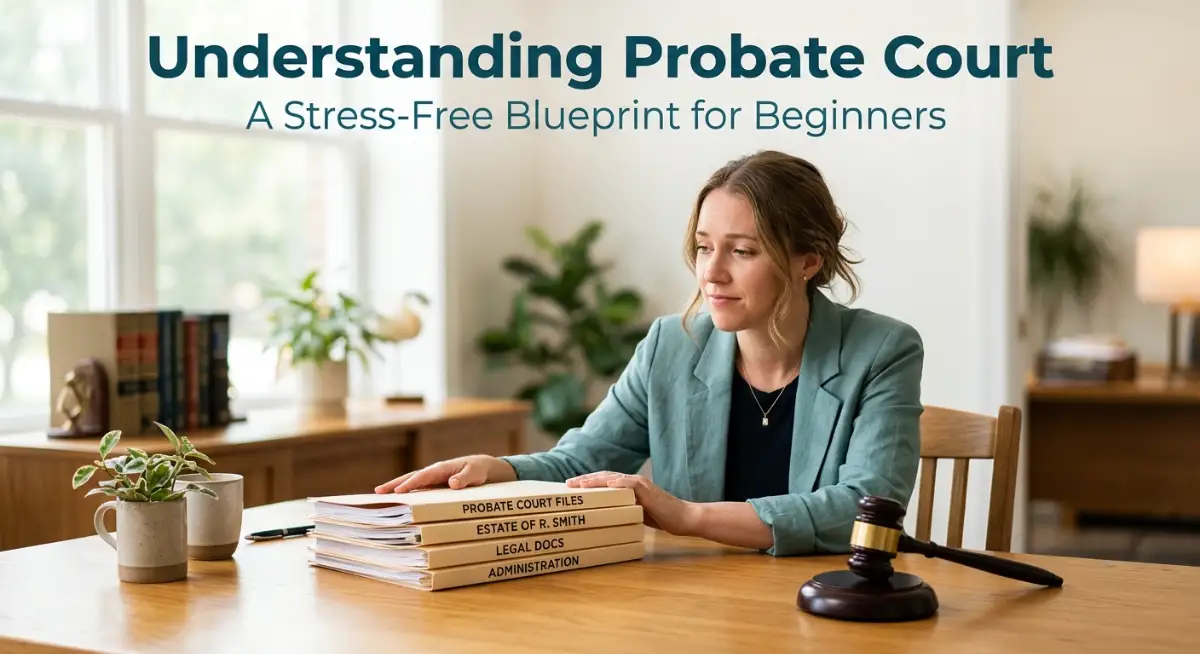
My Personal Nightmare with the Legal Maze
I remember sitting on my living room floor, surrounded by dusty blue folders and old letters. My grandfather had passed away just a few weeks prior, and the house felt quiet and cold. I thought the hardest part was saying goodbye, but then the mail started arriving. I saw words like "Probate," "Letters of Testamentary," and "Intestate Succession." I felt a knot tighten in my stomach because I had no idea what any of it meant.
I spent three nights crying over my kitchen table because I thought I was going to lose the family home to a judge. I believed probate was a scary place where people took your money and made your life miserable. I felt like I was walking through a thick fog without a flashlight. It was honestly the most stressful time of my life, and I felt completely alone.
This feeling of being lost is what most people go through when they first hear the word probate. You are already grieving a loss, and now you have to deal with a confusing court system. It feels like the world is asking you to become a legal expert overnight. It is not fair, and it is definitely not easy to do while you are mourning.
The mental weight of this is heavy. You worry about making a small mistake on a form that could cost thousands of dollars. You worry about family members getting angry over an old watch or a bank account. Most of all, you worry that you are not doing enough to honor the person you lost.
I am writing this because I don't want you to feel that same fear. I want to pull back the curtain and show you that probate is just a process. It is a slow, boring, and very formal process, but it is not a monster. Once you see the map, the fog starts to lift.
I spent months learning how to navigate this maze, and I realized something. If you take it one tiny step at a time, you can handle it. You don't need to be a lawyer to understand the basics. You just need a clear plan and a little bit of patience.
Why the Word "Probate" Scares Good People
Most people think probate is a way for the government to steal your inheritance. I used to think the exact same thing when I first saw those court papers. But let’s look at what it actually is without the scary language. Probate is just a legal way to make sure the right people get the right stuff.
Think of it as a "sorting hat" for someone’s life. When a person passes away, they leave behind things like a house, a car, or a savings account. They also leave behind bills, like credit cards or utility payments. Probate is the court-supervised process of paying off those bills and giving the leftovers to the family.
The reason it feels so stressful is because it is slow. Courts move at a snail's pace, and that waiting game drives people crazy. You want to move on with your life, but the legal clock is ticking in the background. It feels like your life is on hold while a judge reads through old paperwork.
Another big part of the struggle is the paperwork itself. Each form looks like it was written in a different language. You see terms like "Decedent" instead of "the person who died." You see "Petitioner" instead of "you." It is designed to be formal, but that formality makes it feel cold and unfriendly.
The reality is that the court just wants to make sure no one is cheating. They want to make sure that a secret long-lost cousin doesn’t show up and try to take everything. They want to make sure the bank gets paid for the car loan. It is a system of checks and balances that, while annoying, actually protects the estate.
When you understand that the court is just a record-keeper, the stress starts to fade. You are not on trial; you are just following a checklist. I want to help you build that checklist right now so you can stop worrying and start doing.
Taking the First Step: Finding the Master Key
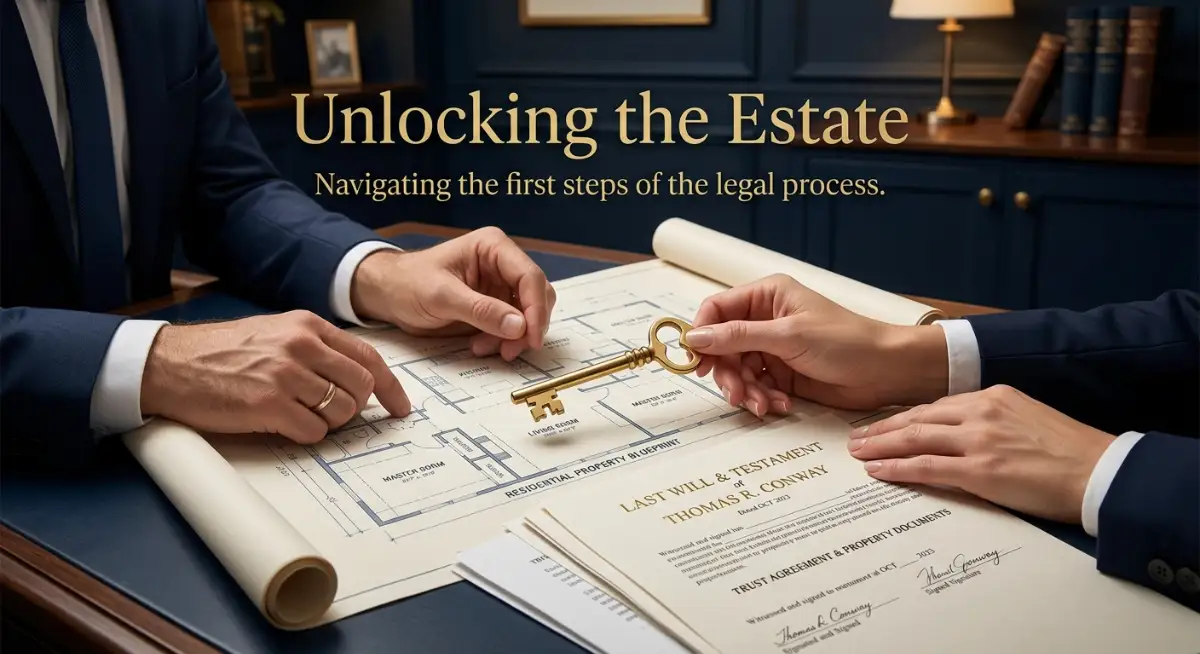
Before you ever step foot in a courthouse, you have to find the "Master Key." This key is the Will. If the person who passed away left a Will, your job is going to be much easier. The Will is basically a set of instructions that says who gets what and who is in charge.
If there is no Will, don't panic. I went through this with a family member, and the court just uses a default set of rules. This is called being "Intestate." It just means the state has a pre-made plan for who gets the assets, usually starting with a spouse and then children.
Your first task is to look through every drawer, safe, and freezer. Yes, people really do hide important papers in the freezer! You are looking for the original signed document, not just a copy. The court usually wants the real thing with the original ink.
Once you have that document, you need to read it carefully. Look for the name of the "Executor." This is the person the Will-writer trusted to handle the business. If your name is there, you are the project manager for this entire process. It is a big job, but you can do it.
Watch This Simple Breakdown of the Probate Timeline
Understanding the timing of a court case is the best way to lower your heart rate. This short video explains exactly how long each phase takes so you can stop guessing and start plannin
Filing the Petition to Start the Clock
Now that you have the Will, you have to tell the court that you are ready to begin. This is called "Filing a Petition for Probate." It sounds very grand, but it is basically just a form that says, "Hey judge, this person died, here is their Will, and I am the one who is going to handle it."
You will need to take this form to the county court where the person lived. You will have to pay a filing fee, which can be a bit annoying. But remember, this money usually comes out of the estate’s funds later, so keep your receipt. I kept a small green box for all my receipts, and it saved me a lot of headaches.
Pro Tip: I highly recommend starting a dedicated "Estate Binder" the very first day. Put every court document, every receipt, and every letter in this binder. I found that having everything in one place made me feel much more in control when things got busy.
After you file the petition, the court will set a hearing date. This is the official "Welcome to Probate" meeting. In most cases, it is very quick. The judge just checks to make sure the Will is real and that you are a fit person to lead the estate.
Once the judge approves you, they will give you a very important piece of paper. This is usually called "Letters Testamentary." This paper is like a magic wand. It allows you to go to the bank, talk to the insurance company, and sell the car. Without this paper, nobody will talk to you.
Notifying the World and the Creditors
Once you have your magic wand (the Letters), you have a legal duty to tell the world. This means you have to notify the family and any "heirs" mentioned in the Will. You also have to notify anyone the person owed money to.
This part feels a bit like being a private investigator. You have to look through old mail and bank statements to find out who the creditors are. Is there a mortgage? A credit card? A hospital bill? You have to send them a formal notice telling them that the probate case is open.
In many places, you also have to put a notice in the local newspaper. This sounds like something out of an old movie, but it is a real rule. It gives any unknown creditors a chance to come forward and ask for payment within a certain timeframe.
The good news is that there is a time limit. If a creditor doesn't respond within a few months, they usually lose their right to collect that debt forever. This was a huge relief for me because I was worried that hidden bills would keep popping up for years.
You are basically building a wall around the estate. Once that notice period ends, you know exactly how much money is owed. You can then pay the bills using the estate's money and move on to the final steps.
Inventory: Counting Every Penny and Plate
The court wants to know exactly what is in the "pot" before you start giving it away. Your next big task is to create an "Inventory and Appraisal." This is just a big list of everything the person owned and what it is worth on the day they passed away.
You need to list the big stuff, like houses and cars, but also the small stuff that has value. This includes jewelry, art, or rare collections. For the big items, you might need to hire a professional appraiser to give you a formal value.
I remember spending a whole Saturday counting spoons and looking at old paintings. It felt tedious, but it is a critical step. If you miss something, it can cause problems later when the court asks for a final accounting.
You should also check for "non-probate assets." These are things that don't need to go through court at all. Things like life insurance policies with a named beneficiary or bank accounts that say "Payable on Death" go directly to the person named.
Finding these non-probate assets is like finding a shortcut in a race. It means that money can get to the family much faster. I was so happy when I found out my uncle's life insurance didn't have to wait for the judge. It helped the family pay for the funeral without any stress.
Managing the Money While You Wait
While the court process is slowly moving, you have to act like a temporary landlord and banker. You have to make sure the grass is mowed at the house. You have to make sure the insurance stays active. You have to keep the "status quo."
You should open a special bank account just for the estate. Never, ever mix this money with your personal money. I saw a friend make this mistake, and it turned into a legal nightmare for her.
Keep a detailed log of every dollar that goes in and every dollar that goes out. If you pay a utility bill, write it down. If you receive a refund check from the cable company, deposit it in the estate account and write it down.
This part of the journey requires the most discipline. You are the protector of these assets. Your goal is to make sure the value of the estate stays as high as possible so there is more left for the family in the end.
It might feel like a lot of work, but remember that you are doing this for someone you loved. Each bill you pay and each form you file is an act of service. You are the one making sure their final wishes are respected, and that is a very honorable thing to do.
Dealing with the Tax Man
I know, nobody likes talking about taxes. But when someone passes away, they still have to deal with the IRS for one last time. You will likely need to file a final income tax return for the person who died.
In some cases, if the estate is very large, there might also be an estate tax. However, for most of us, this is not something we need to worry about. The limits are usually very high, but it is always good to double-check with a simple tax guide.
You will also need to get a Tax ID number (EIN) for the estate. This is like a social security number for the probate case. You use this number to open that estate bank account I mentioned earlier.
Handling the taxes was the part I was most afraid of. I thought I would go to jail if I missed a form. But I learned that the IRS is actually quite used to this. If you are honest and show your paperwork, they will help you through it.
Once the taxes are paid and the IRS is happy, you have cleared one of the biggest hurdles. You are now very close to the finish line, where you can finally give the assets to the people who deserve them.
The Waiting Game: Patience as a Strategy
I want to be very honest with you. Even if you do everything perfectly, there will be weeks where nothing happens. You will be waiting for a court date or waiting for a creditor period to end. This is the hardest part for most beginners.
You will feel like the system is broken. You will get calls from family members asking, "When is the money coming?" It can be very frustrating to keep telling them that you are still waiting for the judge.
During these quiet weeks, take care of yourself. Don't let the probate case consume your entire life. Go for walks, spend time with your own family, and remember that the person you lost would want you to be happy.
Probate is a marathon, not a sprint. If you try to run too fast, you will get burned out. But if you keep a steady pace, you will reach the end. You are already through the hardest part by learning how it works.
In the next part of this guide, I will show you how to close the case and finally distribute the assets. You are doing a great job, and your loved one would be proud of how you are handling this. Stay focused, stay organized, and we will get through this together.
Master Strategies for a Smarter Probate Journey
Now that you have the basic map, I want to share some expert secrets that helped me save time and money. Probate does not have to be a dark cloud hanging over your head for months. If you use the right tools and stay organized, you can move through the court system much faster than most people.
My first big secret is the power of the "Small Estate Affidavit." In many places, if the total value of the items in the estate is below a certain amount, you can skip the long court process entirely. This is like finding a secret tunnel that leads straight to the exit. Check with your local court clerk to see what the dollar limit is in your area.
I also learned that managing family members is just as important as managing the paperwork. People get very emotional when a loved one dies, and old arguments often resurface. I found that sending a simple weekly email update to everyone involved kept the peace. It showed them that I was working hard and that things were moving forward.
One thing people often forget is the "Digital Legacy." We live in a digital world now, and you need to find passwords for bank accounts, social media, and email. If the person who passed away owned a home, you must quickly look into understanding their home loan details. You do not want the bank to start foreclosure while you are waiting for a court date.
I also recommend keeping a very strict log of your time and expenses. If you have to drive to the bank or buy stamps for court letters, write it down. In most cases, you are allowed to be paid a small fee from the estate for your hard work as the executor. Having a clear record makes it easy for the judge to approve your payment at the end.
If you are struggling with writing formal letters to banks or creditors, you can use modern tools to help. I found that learning the secret to writing flawless AI prompts allowed me to create professional emails in seconds. It saved me hours of staring at a blank screen, wondering how to sound "legal" enough.
Lastly, check for "Unclaimed Property." Most states have a website where they list money from old bank accounts or utility refunds that were never picked up. I once found a few hundred dollars for a family member that had been sitting in a state fund for five years! It is worth a quick search to see if there is extra money waiting for the estate.
For more advanced legal definitions, I often turned to the Cornell Law School's Legal Information Institute. It is a great place to look up weird words without getting confused by heavy lawyer-talk. Staying informed is your best defense against stress.

Hidden Traps That Can Ruin Your Peace of Mind
Even with a good plan, there are some dangerous traps that I fell into, and I want to make sure you avoid them. The biggest mistake you can make is "Co-mingling" funds. This is a fancy way of saying you mixed the estate's money with your own bank account.
I thought it would be easier to just pay a small court fee with my own debit card and pay myself back later. My lawyer immediately told me to stop doing that. It looks very suspicious to a judge, and it can make family members think you are stealing. Keep every penny of the estate money in its own separate bucket.
Another silent killer of an estate is failing to secure the property. When a house is empty, things can go wrong very quickly. I once forgot to check on a property for a week, and a pipe burst in the basement. It caused thousands of dollars in damage that could have been avoided.
You also need to be very careful with insurance. Sometimes, insurance companies try to void policies if a house stays empty for more than thirty days. I learned the hard way that you must call the insurance agent and tell them the situation. They might need to change the policy to a "vacant home" plan to keep the house protected.
I also saw a friend make the mistake of giving away items too early. A family member wanted a specific piece of jewelry, and my friend just handed it over before the court said it was okay. This is a huge legal risk. If the estate has debts to pay later, you might have to ask for that jewelry back, which is incredibly awkward and stressful.
You must also watch out for old debts. Sometimes, people have hidden traps in their personal loan agreements that cause the interest to spike after they pass away. I spent a lot of time talking to banks to make sure the debt didn't grow out of control.
Lastly, don't ignore the final medical bills. Hospitals can be very aggressive about getting paid. You should learn how to read medical insurance documents properly so you don't overpay. Sometimes the bill says "Amount Due," but insurance hasn't finished their part yet.
If you make a mistake with the court deadlines, it can reset the entire process. I missed a filing date by just one day, and it pushed my court hearing back by two months. Set alarms on your phone for every deadline the court gives you. It is better to be a week early than a day late.
For official guidance on handling the taxes of someone who died, the IRS website on Deceased Taxpayers is a must-read. It is not the most fun website, but it will keep you out of trouble with the tax man. Remember, the judge will not close the case until the taxes are perfectly settled.
Your Path to a Successful Ending
You have worked so hard to get this far. Probate feels like a long, dusty road, but the finish line is finally in sight. You have gathered the assets, paid the bills, and followed the court's rules. Now comes the best part: honoring the final wishes of the person you loved.
The last step is to ask the judge for a "Final Distribution." This is the official order that allows you to write checks to the beneficiaries and hand over the keys to the house. When I reached this step, I felt a massive weight lift off my shoulders. I finally felt like I had done right by my grandfather.
Take a moment to celebrate the small wins you had along the way. Maybe you found a lost document or finally settled a difficult debt. These things matter. You took on a job that most people are afraid of, and you handled it with grace and care.
Moving forward, I hope you take these lessons and use them to protect your own family. Make sure you have your own Will and estate plan in place. It is the greatest gift you can give to your children. It saves them from the very stress you just fought through.
I am so proud of you for taking this journey. You didn't give up when the legal words got confusing. You kept going because you cared about doing the right thing. That kind of strength is exactly what it takes to be a great executor.
You now have the blueprint for a stress-free legal journey. Keep your binder organized, stay patient with the court, and never be afraid to ask for help when you need it. You are not just closing a court case; you are protecting a legacy and a lifetime of hard work.
My own experience with probate was a hard lesson, but it made me much stronger and more prepared for life. I truly believe that if you follow these steps, you will finish this process with your head held high and your heart at peace. Take that first step today, and remember that you have everything you need to succeed.
Common Questions About the Probate Journey
Does every estate have to go through probate?
Not every estate needs to go through the full court process. If the assets are held in a Living Trust, or if they have "Transfer on Death" beneficiaries, they can usually skip probate. Also, many states have a simplified process for small estates that have a low total value.
How long does the average probate case take to finish?
In most cases, you can expect the process to take anywhere from six months to a year. This time is needed for the court to review documents and for creditors to make their claims. If the estate is very large or if family members are fighting, it can sometimes take even longer.
What happens if I can't find the original Will?
If you only have a copy of the Will, or if you can't find one at all, you must tell the court immediately. The judge will then follow the "Intestate" laws of your state. This means the law will decide who gets the assets based on their relationship to the person who died.
Can the executor be held personally responsible for estate debts?
As long as you follow the law and don't mix your own money with the estate's money, you are not responsible for the person's debts. The bills are paid out of the estate's funds. If there isn't enough money in the estate to pay the bills, those creditors usually just lose out.
Do I have to move into the house during probate?
You do not have to live in the house, but you are responsible for keeping it safe. This means making sure the doors are locked, the heat is on in the winter, and the property is maintained. You are the "caretaker" until the court tells you to give the house to the new owner.